What the Urr Does With Its Year: A Guest's Birdwatching Calendar
Birdwatching on the Urr doesn't need a dawn alarm, a telescope the size of a drainpipe or a guide who whispers. It helps, but it isn't essential. From The Old Mill, you are already sitting inside the show. The river shifts, the mud breathes, and something is almost always using the estuary — even in the months when the village feels folded in on itself. What follows is a realistic calendar for guests: what tends to turn up, where to look and how to watch without sending everything up in a panic.
Why the Urr Is a Year-Round Birdwatching Window
It is tempting to think of birding as a spring and summer activity, something to do when the days are long and the hedges are loud. The Urr doesn't work like that. Winter brings the crowds — wildfowl, geese, waders pushed in by cold weather elsewhere. Spring and summer bring nesting birds and long evenings. Autumn is the great movement season, when the estuary acts as a service station for birds heading south. Even the quiet weeks have something in them.
Much of this can be watched from the garden or from an upstairs window with a mug in your hand. That is not a consolation prize. It is one of the best ways to watch the estuary, because the birds are not being pressed by a person walking the shoreline. If you only have a weekend, pick your tide before you pick your walk. The Urr is not a lake; it empties and fills, and the birds follow the water.
January and February: Cold Water, Big Flocks
These are the months when the estuary is at its most crowded and most fragile. Whooper swans and pink-footed geese use the wider Solway area, and grey geese can be seen and heard moving over the village. On the water and mud, look for teal, wigeon, shelduck and, if you are lucky, pintail. Curlew, oystercatcher and redshank are still about, often roosting in tight groups when the tide is high.
This is a time for watching from a distance. High-tide roosts are the birds' equivalent of a warm bus shelter — they need them. Walking along the shoreline at high water, or letting a dog run at the mud, can push whole flocks into the air for no good reason. Use binoculars, stay on the path and enjoy the fact that you can see so much without leaving the garden.
March and April: The Estuary Starts to Turn
Change is in the air, even when it doesn't feel like it. Shelduck begin their noisy courtship, lapwings tumble over the fields and curlew calls carry across the water in the evening. Oystercatchers pair up and start claiming territory. Sand martins and swallows return, and the first chiffchaffs and willow warblers turn up in the lanes.
A short walk away from the mill adds hedgerow birds to the estuary list — blackcap, whitethroat, perhaps a bullfinch. But keep one eye on the mud as well. Passage waders can drop in during March and April, and the mix changes from week to week. This is the month to carry binoculars even on a short stroll, because the Urr has a habit of producing something unexpected.
May and June: Nesting Season, Quiet Feet
By late spring the estuary is busy with family business. Shelduck escort broods across the water, oystercatcher chicks appear on the shore and sedge warblers rattle away from the reeds. Swifts scream over the village and sand martins hunt low over the river. It is a brilliant time to sit outside — but not a time to go looking for nests.
Disturbance-free viewing matters most now. A bird that flies off a nest or leaves chicks exposed is not being dramatic; it is responding to a threat. Keep to paths, keep dogs close and use binoculars rather than your feet. From the garden, you can often watch more by doing less. The evening light in June is long and soft, and the estuary can be at its most peaceful after the day visitors have gone.
July and August: The Quiet Months Aren't Empty
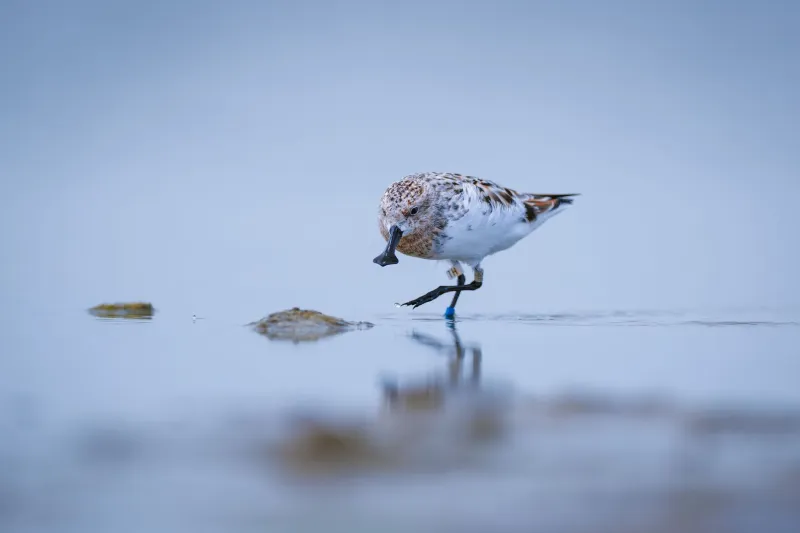
There is a lull in high summer, or at least a change of mood. The dawn chorus fades, the hedges go quiet and the estuary can look empty at midday. Look again at low tide. Post-breeding waders begin to move south, and the first returning curlew, redshank and dunlin appear. Common sandpipers bob along the shoreline, and greenshank can turn up if you are paying attention.
This is also the month for looking at mud properly. It sounds dull; it isn't. The Urr at low water is a working surface, and the birds are using it. A kingfisher may flash along the river, and grey herons stand about like they are owed money. August is not a write-off. It is a quieter chapter with better light and fewer people.
September and October: Return of the Waders
Autumn is the estuary's great movement season. Wader numbers build, flocks of lapwing and golden plover appear over the fields, and the first pink-footed geese arrive from the north. Curlew and redshank feed on the mud, while shelduck gather in larger groups. The sky is worth watching as much as the water — geese often announce themselves before you see them.
This is a good time for short walks along the lanes and the shoreline, but again, tide matters. Two hours either side of high water can be excellent for roosting birds; low water is for feeding. If you are new to birding, pick one spot and stay with it for half an hour. The Urr rewards patience more than it rewards charging about.
November and December: Short Days, Sharp Light
Winter birding is underrated. The days are short, but the low sun side-lights the mud and makes everything look carved. Whooper swans and geese move over the area, wildfowl gather on the water and birds of prey become more visible — a merlin low over the marsh or a peregrine causing chaos among the waders. Short-eared owls can hunt the rough ground at dusk, though they are never guaranteed.
Dress properly and you can have the estuary almost to yourself. The trick is to accept the season on its own terms: a shorter window, colder hands, earlier sunsets. From The Old Mill, that window can be enough. A hour of good light at the right tide beats a whole afternoon of walking at the wrong one.
Tides, Binoculars and Not Being That Person
The single most useful thing you can do is check the tide. The Urr is a tidal estuary, and the difference between high and low water changes everything. High tide concentrates birds at roosts; low tide spreads them across the mud. Neither is better, but they are different. If you want to see large numbers, aim for the couple of hours around high water. If you want to watch feeding behaviour, go as the tide drops.
A decent pair of 8x42 binoculars is plenty. You do not need a spotting scope unless you are serious about distant mud. Keep your distance, stay on established paths and never walk towards a roost to get a better photo. Dogs should be on a lead anywhere near the shoreline in winter. This is not about rules for their own sake; it is about not ruining the show for the birds and for the next guest.
A Few Honest Expectations
You will not see everything on this list in one visit, and nobody does. Weather, tide and luck all have a say. Some days the estuary is thick with birds; other days it looks empty and you end up watching a heron. That is birdwatching. The point is that the Urr is never just scenery. It is a working, breathing habitat, and from The Old Mill you have a front-row seat without leaving your coffee behind.