Grain, Oysters and Whispers: Tracing Palnackie's Hidden Past From Our Back Door
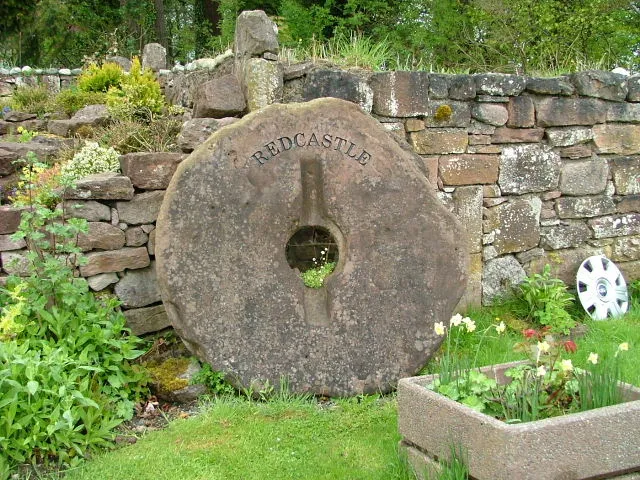
Photo: Ralph Greig , CC BY-SA 2.0, via Wikimedia Commons
There's a particular pleasure in staying somewhere with history you can walk through. Palnackie is small enough to cross in five minutes, but give it an afternoon and a bit of curiosity, and it starts telling stories. The harbour silted up decades ago, the oyster fleet is long gone, and yet the clues are everywhere — in street names, in old photographs, in the shape of the shoreline itself.
This is a walk you can do from our back door in well under two hours, or stretch into a full day with a pub stop and a flask. Here's what to look out for.
A Harbour That Fed Scotland
It's easy to forget that the Urr was once a working artery. Grain from the fertile Stewartry farmland came down to Palnackie by horse and cart, was loaded onto sloops, and shipped out to markets far beyond Galloway. The harbour at the bottom of the village — now a popular spot for kayakers and paddleboarders at high tide — once handled serious tonnage.
Stand on the quay at low water and look at the stone. Those worn steps and mooring points weren't built for leisure. At the peak of the trade, vessels regularly ran from here to Liverpool, the Clyde and beyond. The tidal reach of the Urr meant boats could work up as far as the village, and everything about Palnackie's layout — the stores, the cottages stacked close to the water — speaks to that era.
The Oyster Years
The Solway's oyster beds were legendary in the nineteenth century, and the Urr estuary had its share. Locals dredged them by sail and oar, sending barrels south to feed English cities. There's a reason so many coastal villages here have a whelk-shaped chip on their shoulder about the past: the trade collapsed through over-fishing by the century's end, and the boats moved on.
You can still find native oysters in the estuary mud if you know where to look, though we'd gently suggest admiring rather than foraging. Better yet, time your walk for a big spring tide and watch the flats open up — that vast, glistening expanse is exactly what the dredgers worked.
Faces in the Village Hall
Pop into the village hall (or peer through the window if it's locked) and you may catch sight of the old photographs that hang there — weathered portraits of Palnackie folk from a century and more ago. Fishermen, farm workers, families in their Sunday best. There's something quietly moving about it: the man in the picture may well have lived in the cottage you're walking past.
If you're keen on the archival route, the Stewartry Museum in Kirkcudbright holds a trove of local material, and it makes a fine companion trip on a wet day. But honestly, the photographs in the village do the job just as well for the casual wanderer.
Smuggler's Country?
Now for the fun bit. Place names around the Urr have a whiff of the illicit about them. Local lore points to coves, lanes and field names that suggest cargo moving after dark — brandy and tobacco being the usual suspects in the eighteenth century, when customs men were thin on the ground and the Solway's inlets offered endless hiding places.
We're not going to point at any specific cottage and call it a bonded store — half the fun is the speculation, and the other half is that nobody truly knows. But walk the shore path at dusk, with the tide sighing in and the lights of the village just visible, and it's not hard to imagine a longboat sliding up onto the mud, oars muffled, men moving fast and quiet.
The old drove routes and footpaths inland from the village all make good ground for this kind of daydreaming. Take the lane behind the harbour, follow it up past the fields, and let your imagination do the rest.
Your Walking Route, Roughly
- Start at The Old Mill and head down through the village towards the harbour.
- Pause at the quay — read the stone, check the tide, look for the old working edges.
- Continue along the estuary path as far as your legs fancy; the mudflats at low tide are the best history lesson going.
- Turn inland on one of the lanes behind the village and loop back, keeping an eye on field boundaries and old walls.
- Finish back at the hall, if only to match faces in the photographs to the cottages you've just passed.
Wear decent boots — the shore path can be clarty after rain — and check the tides before you set off. A rising tide will pinch parts of the estuary path quicker than you'd expect.
Why It Matters
There's a temptation, when a place is as quiet as Palnackie, to assume it was always thus. It wasn't. This was a village with cargo to move and money to make, tied into national trade networks by sail and tide. Walking it with that in mind changes everything — the harbour becomes a quayside, the lanes become rat-runs for contraband, and the photographs in the hall become your neighbours.
Come back to the Mill afterwards, put the kettle on, and tell us what you spotted. We're still learning the village's stories ourselves — and the best ones usually come from guests who've been out walking with their eyes open.