Flour, Granite and the Tide: What The Old Mill's Walls Could Tell You
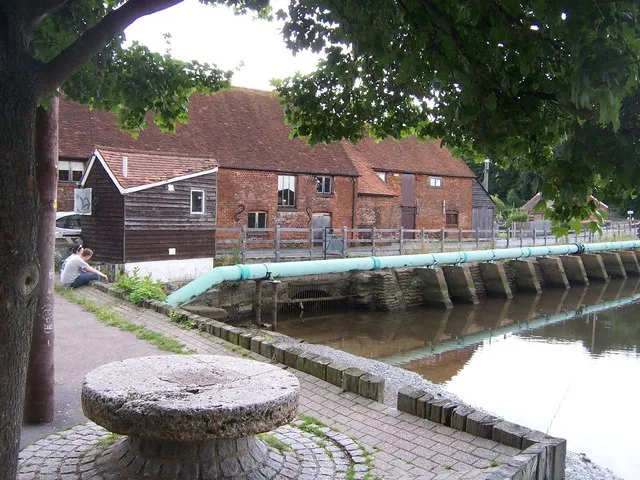
Photo: Colin Babb, CC BY-SA 2.0, via Wikimedia Commons
Most guests arrive at The Old Mill the same way: down the narrow lane, past the village shop, with one eye on the water and the other on the parking. The building looks settled, comfortable, as though it has always been a place for holidays. It hasn't. For the best part of two centuries, this was a workplace — one of several in a village that earned its keep from grain, stone and the peculiar arithmetic of a tidal port.
A Village That Answered to the Tide
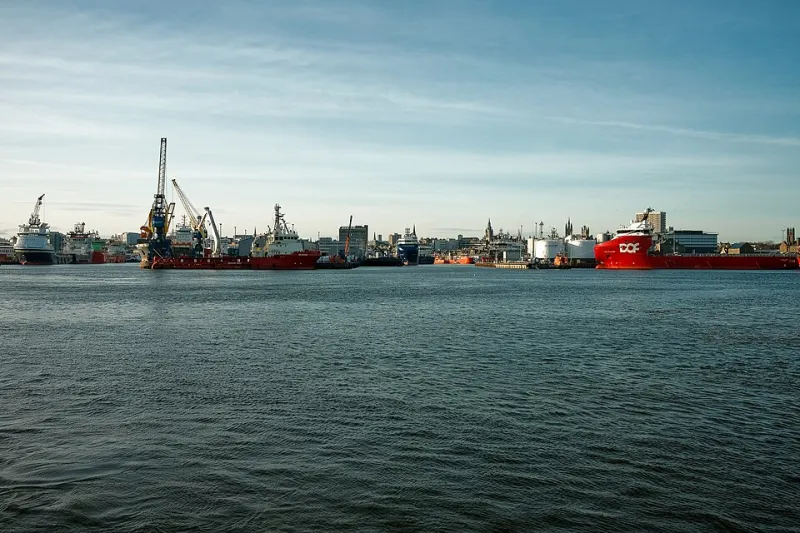
Palnackie sits on the River Urr, two winding miles from the sea at Rough Firth. That distance should have ruled it out as a port, but the Solway works differently. At high water, the tide pushes far enough inland to float small coastal vessels right up to the village quay — and for generations, that was all the infrastructure trade needed.
Twice a day, the harbour filled; twice a day it emptied into a gleam of mud. Everything ran on that rhythm. Boats were timed to the tide tables rather than to timetables, and cargoes were loaded and unloaded in the window of a high water. It's a pattern we've written about before for visitors planning their weekend — but in the working era, it wasn't a curiosity. It was the whole economy.
The Mill Itself
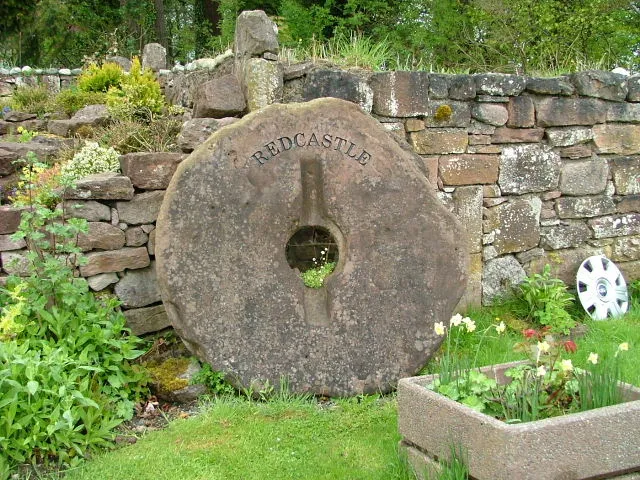
The building now housing our guest rooms began life as a corn mill, and the clue is in the name — mill, millpond, mill lade. Grain arrived by horse and cart from farms scattered across the Urr valley, and the water did the heavy work. Later, as milling consolidated into larger operations, the building adapted rather than died, as so many rural mills did.
What guests notice today — the thick walls, the deep-set windows, the sense that every room is a slightly different shape — is the fingerprint of a building that was altered as its job changed. Ask us about the floor levels sometime. They don't line up, and there's a reason.
Granite, Kippers and Coastal Traders
The mill was only part of the story. In the nineteenth century, Palnackie's quay was a busy little terminal for a trade you might not expect: granite. Stone quarried in the surrounding countryside was carted down to the harbour and shipped out by coaster — much of it bound for construction projects further along the coast and beyond. Walk the quay at low tide and you can still make out the ironwork and mooring fittings that held those vessels fast.
Other cargoes came and went with the seasons. Fertiliser and coal came in; agricultural produce went out. And, as along much of the Solway, fish played its part — the area had its own smokehouses, and the smell of a good kipper was once as much a part of the village as the cry of the oystercatchers. By the early twentieth century, lorries and railways were quietly taking the trade away, and the port faded into the peaceful backwater you see today.
A Self-Guided Stroll Through the Working Past
If you'd like to see what remains, here's a short circuit — fifteen minutes at a stroll, longer if the light's good.
Start at the Old Mill itself. Look for the line of the old mill lade and imagine water where the garden now grows. The building's oldest stonework is at the lower end, closest to the water.
Walk to the quay. Follow the lane down to the harbour basin and take your time over the quay walls — the stonework is superb, laid by hands that expected it to last. At low water you'll spot the remains of moorings and slipways.
Find the tidal marks. Look up as well as down; the walls carry old markers and scars from decades of hulls and hoists.
Cross to the far side of the basin and turn back to look at the village as a skipper would have seen it from a deck at high water — the mill, the houses, the lane. It's the best view of what Palnackie once was.
Finish back at the Mill with the kettle on. The trade is gone, but the tide keeps its old schedule — and there are worse things than a building that learned to live by it.