Reading the Water: A Visitor's Guide to Palnackie's Tides (and Why They Make Your Stay Better)
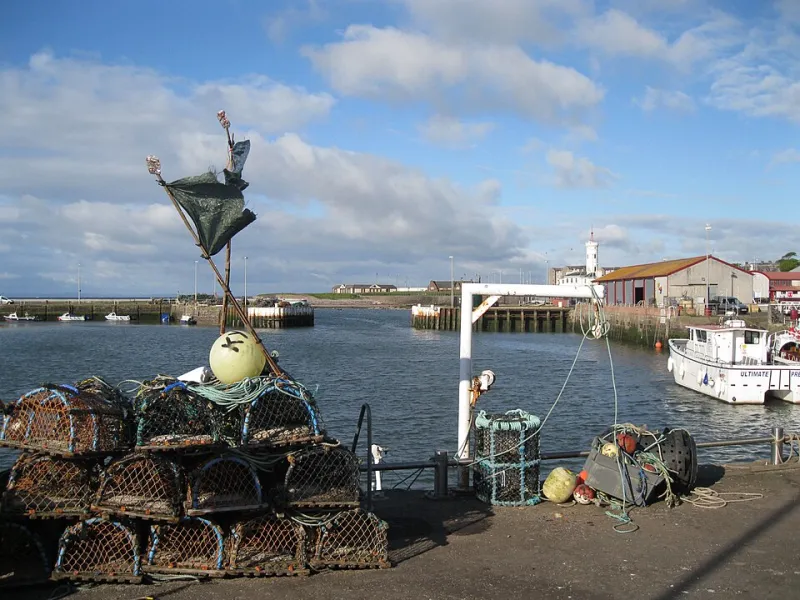
Photo: Bob Jones , CC BY-SA 2.0, via Wikimedia Commons
There's a moment at Palnackie that catches most first-time visitors off guard. You arrive mid-afternoon, look out from the old harbour wall, and see nothing but a vast expanse of glistening mud stretching towards the Solway. Then you come back after breakfast the next morning and — where on earth did all that water come from?
Welcome to life on a tidal harbour. The Solway Firth has one of the largest tidal ranges in the UK, and Palnackie sits right at the mercy (and the mercy is real) of its daily rise and fall. Once you've got your head around it, the tide stops being a quirk and becomes the best planning tool you have.
So How Do the Tides Actually Work Here?
In simple terms: the sea comes in twice a day and goes out twice a day, roughly every six hours or so between each turn. High water at Palnackie doesn't happen at the same time every day — it shifts forward by around 50 minutes daily, following the moon rather than the clock.
What makes the Solway special is the sheer scale of the movement. At spring tides (which coincide with full and new moons), the difference between low and high water can exceed seven metres. That's not a gentle lap up the slipway; that's a completely different landscape twice a day.
Before you set off, check a reliable tide table — the Harbour at Palnackie posts local predictions, and any UK tide app will have the nearest station. Time your first harbour stroll for an hour before high water and you'll see the village at its most photogenic: boats afloat, water lapping the stone walls, the whole place looking like a postcard.
When to Visit for the Drama
If you want the harbour at full theatrical effect, aim for a spring tide around midday or late afternoon. The incoming tide in particular is a spectacle — locals call it the bore rush, and watching the water race up the channel and fill the basin in under an hour never gets old.
Low tide has its own charms, mind. The exposed mudflats are a feeding ground for curlew, redshank and oystercatchers (the Solway is one of the most important wintering grounds for wading birds in Britain), and if you're up early with a flask of coffee, the sight of dawn light across the flats is worth the alarm.
A word of caution that every local will give you anyway: never venture out onto the mud. It looks solid and isn't. Enjoy it from the harbour wall, the coastal path, or the beer garden with a pint in hand.
Timing Day Trips Around the Water
Sandyhills Bay — a fifteen-minute drive down the coast — is a proper sandy beach, and the tide transforms it. At high water the sand shrinks to a strip; at low tide it opens up into a huge sweep of flat, firm sand perfect for a long walk, a bucket-and-spade mission with the kids, or flying a kite in the Solway breeze. Go two to three hours after high tide for maximum beach.
Kippford is tidal in a different way. This pretty village on the Rough Firth is a sailing spot, and the scene changes hour by hour. Dinghies head out on the rising tide; at low water the boats sit on their moorings with the seabed exposed. If you fancy a walk, time the Rough Firth coastal path for a falling tide and you'll get the best birdlife along the water's edge.
Rockcliffe next door is more forgiving — the beach and the walk out to Rough Island (a nature reserve, closed during nesting season) work at most states of the tide, though check access if you're set on the island crossing.
A Sample Tidal Day
- Morning: High water around 8am? Perfect — grab breakfast, then watch the harbour fill before driving to Sandyhills as the tide drops.
- Midday: Lunch at the Steam Packet Inn in Kippford (dog-friendly, waterside, does a cracking crab sandwich) while the boats bob on the firth.
- Afternoon: Walk the coastal path from Rockcliffe as the water recedes and the waders move in.
- Evening: Back to Palnackie for sunset over the flats — low tide skies here are something else.
The Bottom Line
You don't need to be a sailor to love a tidal village — you just need a tide table and a bit of flexibility. Build your days around the water rather than against it, and the Solway will keep surprising you. And when you come back to the mill after a day of it, the sound of the tide turning in the night is the best lullaby Dumfries and Galloway has to offer.